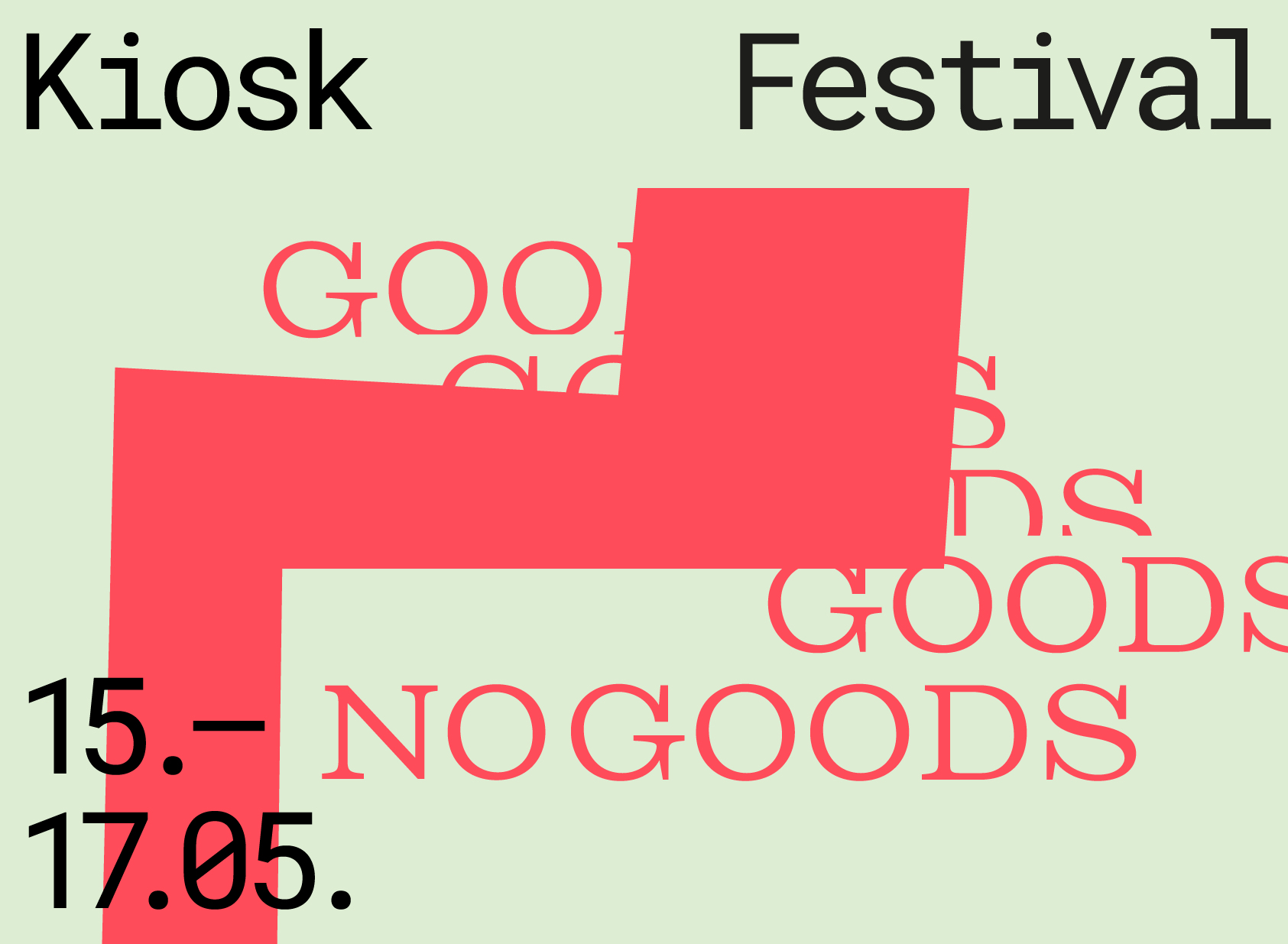
The NOGOODS Kiosk Festival, is not a conventional event, rather a small counter-space: for encounters, conversations, and exchange, as well as for literature, performance, music, and art.
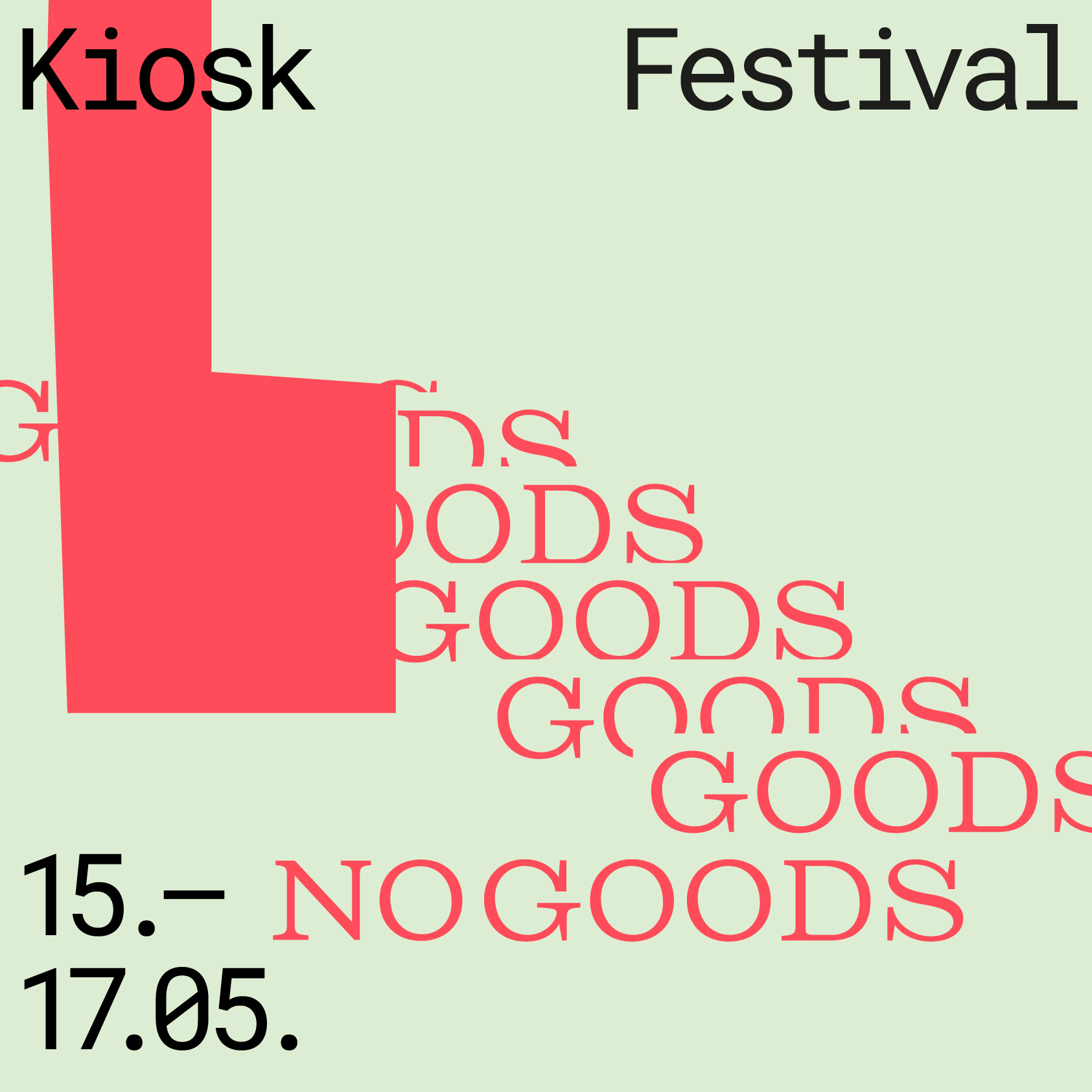
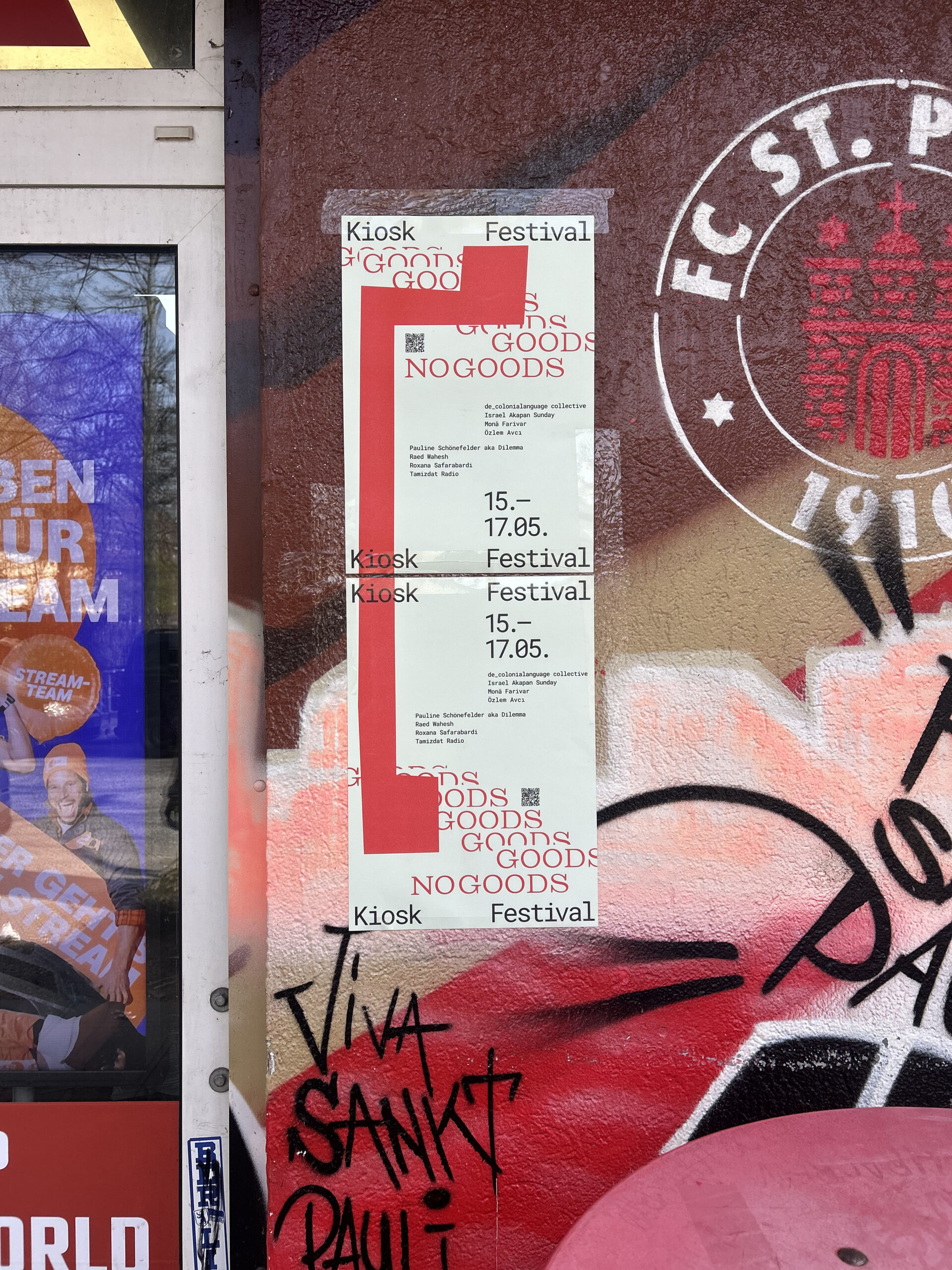
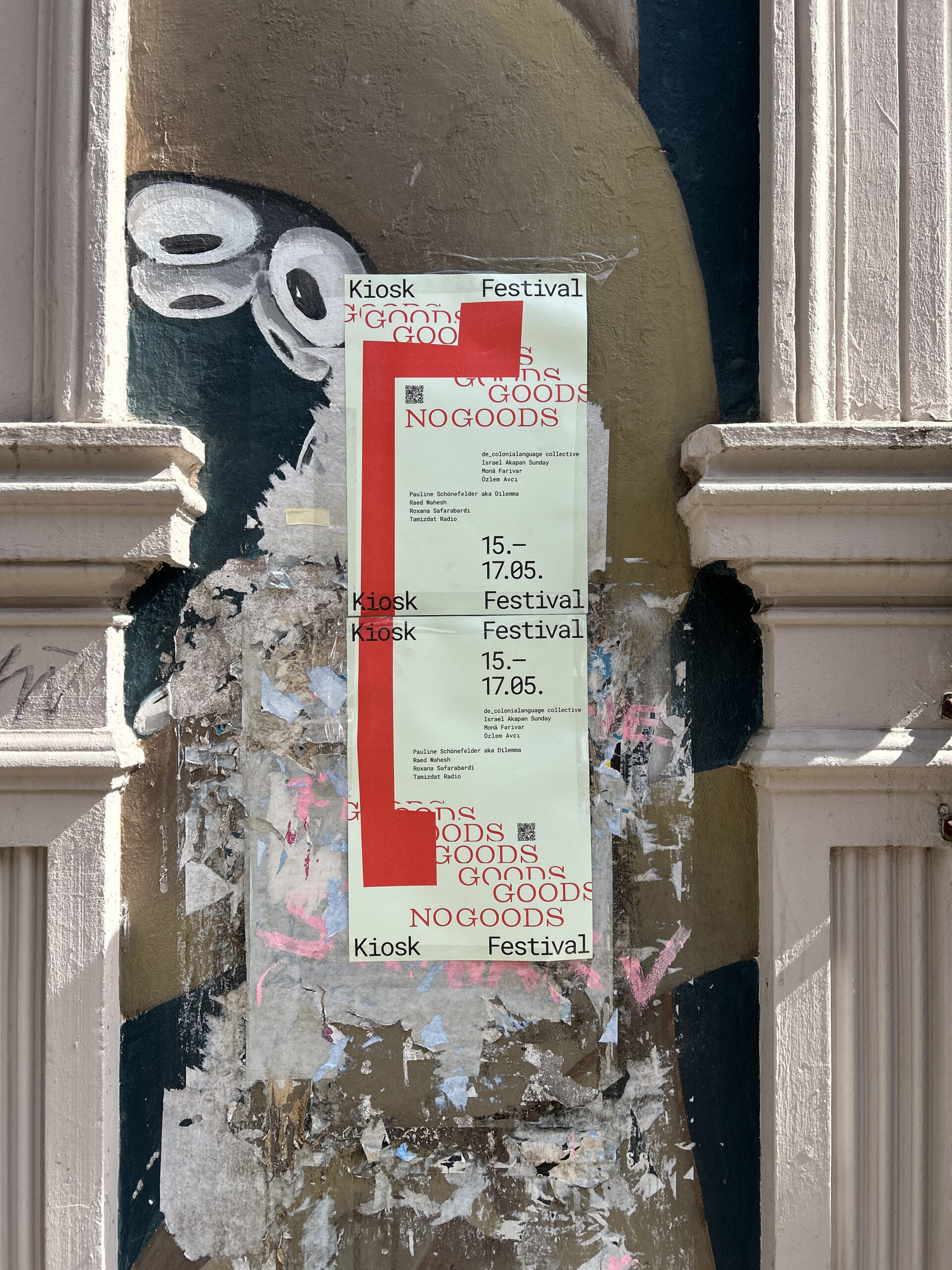
Join us from May 15–17th 2026
The Kiosk Festival emerged from a shared desire: not to find answers, but to create small pockets of time, where people come together, listen, might not agree, and still decide to stay.
We are interested in what happens when language breaks, when it is no longer enough, when experiences cannot easily be translated, or do not fit into the logics of commodification and exploitation.
Perhaps it is about solidarity.
Or simply about being together, sharing, and enduring — even if not everything can be understood.
We warmly invite you into spaces that quietly almost disappear within everyday life, and precisely because of that, shape it: the kiosk on the corner, the hair salon, the flower shop with its changing colors, the benches for brief exchanges. All these infrastructures of care that quietly hold us together.
Programme PDF.
Programme
Friday 15.5.2026
19:30 at Pamukkale Café
O S T
by Pauline Schönfeld aka dilemma
A concert performance
This year, Pauline Schönfelder is as old as her parents were when the country they were born into simply disappeared: the GDR.
Dilemma invites you to a concert performance in which wild fantasies of past times are reworked, reshaped, imagined, and performed anew. Again and again, she grapples with the shame of her own lack of knowledge, with the gap between narration, imagination, and lived experience.
OST (Original Soundtrack) is a concert performance and an immersion into what has deeply inscribed itself as an emotional legacy. Everyday life, anecdotes, and an assemblage of collective question marks from an entire generation of a country that no longer exists: the GDR. But how do you tell the story of something you never experienced yourself?
20:30 at Pamukkale Café
I don’t perform, I just play
by Monā Farivar
A dance performance
Whether I watch videos of dancers in 1970s Persian cabaret or see dancers in the hip-hop scene, the artistic survival strategy of us women is timeless. We step into the light with our bodies, allowing ourselves to mimic the norm in parody, to mirror it with silliness but also with sensuality, and to make it our own. Our care work, our humor, our embodied memories are the invisible structures through which dance cultures are preserved, transformed, and passed on collectively.
I don’t perform, I simply play.
Meet the artist:
Participants:
Pauline Schönfelder ist Künstlerin in einem hybriden Geflecht aus Schauspiel und Regie, Performance und Stimme. Geprägt durch ihr Masterstudium in Performance Studies an der Universität Hamburg mit Fokus auf Performancepraxis, changieren ihre Arbeiten zwischen autofiktiven Narrativen, hoher dynamischer Körperlichkeit und poetisch-humorvollen (Musik)Texten. Sie arbeitet kollaborativ mit Künstler*innen, wie Yolanda Morales, Barbara Schmidt-Rohr, Regina Rossi, Göktuğ Engel und vielen mehr. Ihre Arbeiten waren u.a. auf Kampnagel, am LICHTHOF Theater, am stellwerk weimar sowie auf verschiedenen Festivals zu sehen. Schönfelder war 2024/25 Stipendiatin des »stART.up« Stipendiums der Claussen-Simon-Stiftung und erhielt das Recherchestipendium »WE PRODUCE« des LICHTHOF Theaters zu ihrer Forschung um das Betrauern des Ungelebten. Aus dieser Recherche heraus entwickelte sie dort ihr Debüt, die kulinarische Konzertperformance »OST (Original Soundtrack)«, in der sie ihr Alter Ego, die Singersongwriterin »dilemma«, zum Leben erweckte. Der Name ist Programm. Für ihre thematischen Auseinandersetzungen ebenso wie für ihr Musikprojekt im Spannungsfeld von Konzert und Theater.
Monā Farivar (sie/ihr) ist eine multidisziplinäre Künstlerin aus Hamburg und Teil der deutschen Hip-Hop-Szene. Tanz, Film, Performance und Sounddesign wurden für sie früh zum Ausdruck von Freiheit. Im Laufe der Jahre choreografierte sie in zahlreichen Film und Theaterproduktionen. Neben ihrer künstlerischen Arbeit kooperiert sie eng mit Kulturagent:innen und verschiedenen Kollektiven, um diversitätsorientierte Bildung zu fördern.
Saturday 16.05.2026
13:00 at Dat Backhus
Open Recording of the Radio Show Tamizdat
by FSK Radio
A Podcast
Tamizdat Radio gives a voice to critical and oppositional perspectives from migrant communities — hosted by LöSha (Alexei Markin), art critic and artist. The show covers antimilitarism, desertion, and resistance to post-Soviet nationalism, alongside conversations about art, culture, and life in exile. This special festival episode is recorded in partnership with the Intercultural Forum Hamburg and festival artists — on decolonisation, the role of migration as artistic experience, and what it means to be an international artist today.
Tamizdat Radio airs every third Monday of the month at 8 pm on FSK Hamburg.
16h at Schnakle Feinkost und Blumenladen
when words go missing..
with Roxana Safarabadi, Raed Wahesh, Danja Burchard and Elena Leskova
And then, suddenly, what is considered normal blurs behind the veil of confusion. Words disappear, lose their meaning, turn into whispers. Language transforms, and with it, the bodies it inscribes itself into. Quietly, almost imperceptibly, and simultaneously screaming!
Together with three authors, poets, and thinkers, we want to think about words that are slipping through our fingers, about languages as refuge and expression, that carve out spaces of a different form of existence.
18h at P&P drinks und gude laune
DJ set mit Özlem Avcı
Meet the artists:
Participants:
Roxana Safarabadi lebt in Berlin und ist als freiberufliche Schauspielerin, Sprecherin und interdisziplinäre Künstlerin tätig. Ihre Engagements führten sie u.a. ans Thalia Theater, Kampnagel, Theater Bonn und Deutsche Nationaltheater Weimar. Zeitgleich dreht sie für Film und Fernsehen. In Hamburg arbeitete sie mit verschiedenen Theater-Kollektiven zusammen und ist selbst Mitbegründerin des feministischen Theater-Kollektivs »ausgesprochen frei«. Ihre schauspielerischen, als auch künstlerischen Arbeiten waren über vier Jahre Teil des Hamburger »fluctoplasma – Festival für Kunst, Diskurs und Diversität«. Sie ist Teil des Redaktionsteams von »DRAMA – Magazin für szenische Literatur« und ist Gründerin und Teil des Kurator*innen Teams »REMISE – interdisciplinary lab for art and research« in Hamburg. In ihren freien Arbeiten ist sie daran interessiert, politische und gesellschaftliche Themen zu dekonstruieren und künstlerisch zu verarbeiten. So entstanden u.a. Kurzgeschichten, ein Kurzfilm Ambivalence Beyond Paradies und Theaterstücke, wie PARADISO – Oder der Geruch nach Asphalt.
Raed Wahesh is a Palestinian-Syrian writer, poet and journalist. To date he has published four volumes of verse.
Wahesh has developed over the years into a political writer who addresses social issues and makes a theme of war and destruction in his homeland. He has been supporting the Syrian revolution in his writings. Raed Wahesh fled Syria in 2013 and came to Germany, where he was initially a guest in the Heinrich Böll House. He now lives in Hamburg.
Sunday 17.5.2026
15h at Pamukkale Café
decolonial language collective
by Denis Esakov, Marina Solnzeva
A public intervention
to find the beach under the paving stones, we need Bodies on the streets…
decolonial_language is a transnational art and research collective working at the intersection of critical language studies, decoloniality and radical solidarity. Since 2023 they run an imaginary Open Air Museum of Decoloniality at Alexanderplatz in Berlin, a grassroots collective university Nearby Reading Room, an independent publishing project, and a residency programme Voices Otherwise.
17:00 at St. Pauli Cut, Hairsalon
Kò Dọ́gba
by Israel Akapan Sunday
An experimental thought with the Body Language
Kò Dọ́gba… is a Yorùbá phrase that expresses a concept of inequality, imbalance, or unfair comparison.
From the political dungeon of history, where systems are built not on bone but on ledger books, a truth is excavated: hierarchy is the oldest choreography. The state is a hand—some fingers command, some fingers labor, some are broken and forgotten.
The thumb is the state: oppressive, grounding, holding everything down with the weight of law. The index finger is the politician: pointing, blaming, directing rage away from the throne. The middle finger is the protester: rising in ugly, necessary defiance. The ring finger is the citizenry: bound by contracts of silent complicity. The little finger is the marginalized: flicked away, whispered over, legislated into the periphery.
This performance is a 30-minute seance for the body politic. It is a autopsy performed on the living. The music is the sound of policy papers rustling, of tear gas canisters rolling, of the static between propaganda channels. To watch is to feel the ghost of your own compliance, to trace the map of power on your skin. It asks: if the hand is unjust, do you beg for equality, or do you learn to move each finger independently—until the hand can no longer clench into a fist of control?
Which one are you in the machinery? And if you are the little finger, when do you realize the whole arm is sick?
Participants:
decolonial_language is a transnational art and research collective whose members come from Central and Northern Asia and Eastern Europe — curators, artists, activists and researchers working at the intersection of critical language studies, decoloniality and radical solidarity. Since 2023 they have run an imaginary Open Air Museum of Decoloniality at Alexanderplatz in Berlin, a grassroots collective university Nearby Reading Room, an independent publishing project, and a residency programme Voices Otherwise.
Israel Akpan Sunday
My name is Israel Akpan Sunday, I work as a choreographer, dancer and musician between Hamburg and Lagos. My works are political and challenging, as well as poetic and sensual. My performance style is characterized by a fusion of everyday movements and behaviors with contemporary dance, as well as the constant incorporation of live music. As an interdisciplinary artist, I delve into profound societal aspects, including sociological, political, and economic issues, and questioning the very foundations of our systems. Having adiscursive exchange with my colleagues and my audience always plays a vital role in my processes…
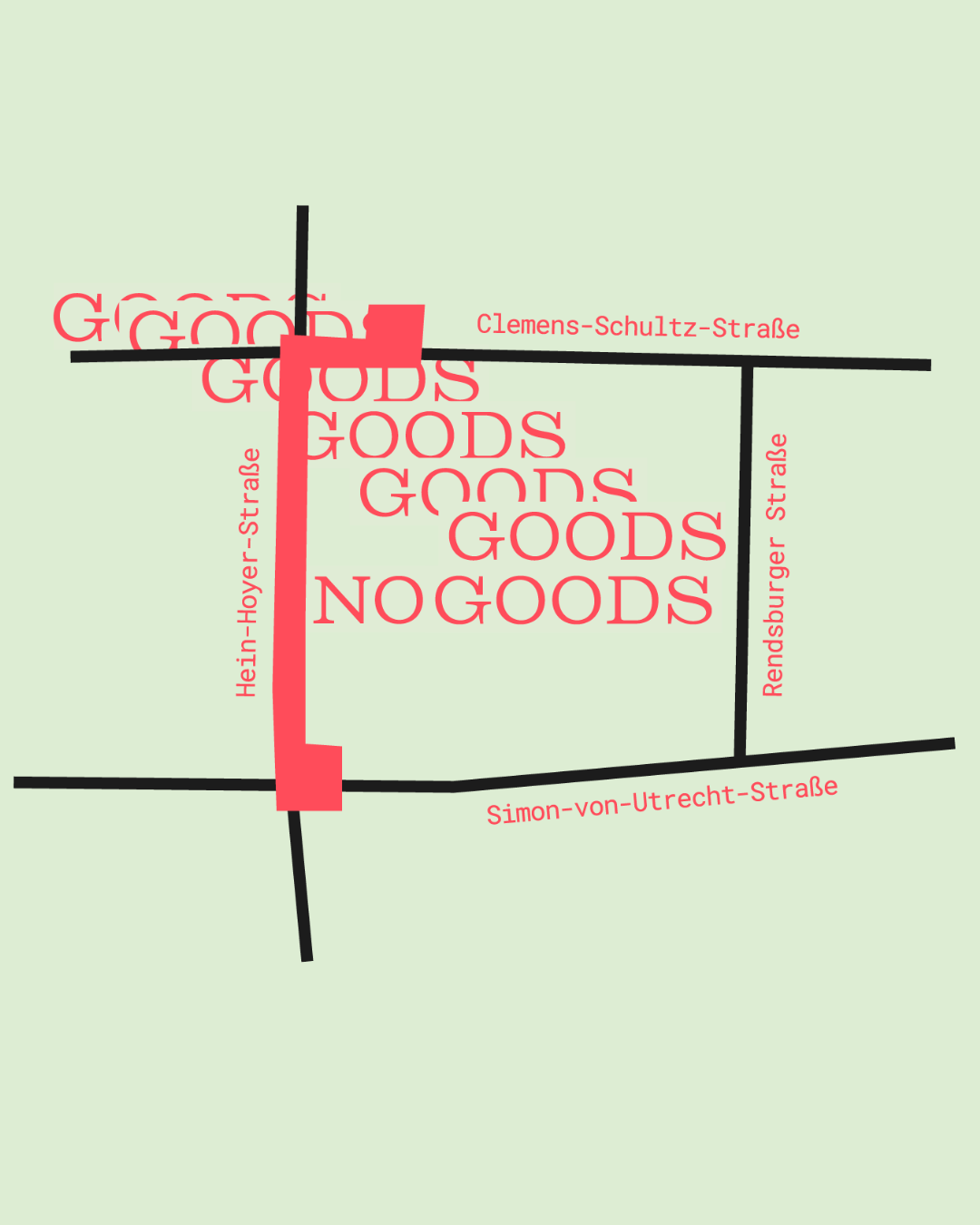
VENUES
As a festival, we are kindly hosted by different locations:
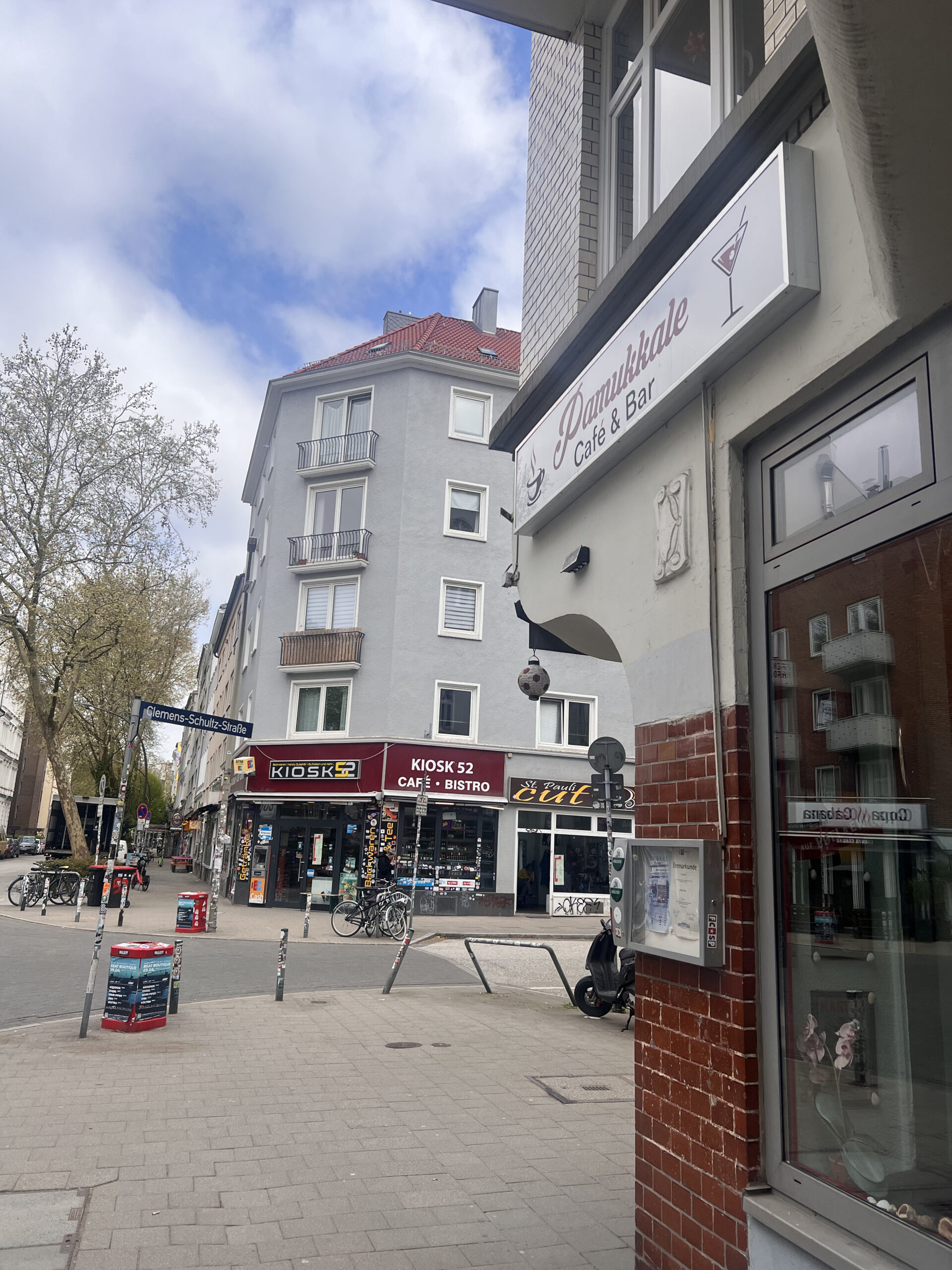
Pamukkale Café
A corner café serving not only tea and beverages, but also acting as gathering space for the community for over 25 years.
Dat Backhus
A bakery acting as exhibition space, for little goods and insights to the live of the streets.
P&P drinks und gude laune Bar
A bar serving drinks, djs and all different kind of music from emerging and established vinyl players, run by good vibes only.
Schnakle Feinkost und Blumenladen
A bar, flowershop, lunch place and vibrant hub at night, where neighbors cross with tourists, and ages mix and mingle.
St. Pauli Cut, Hairsalon
A hair saloon at day, and then a theater rehearsal space at night.
Languages
Together, we speak German, English, Arabic, Russian, Ukrainian, Persian, Spanish, Turkish — and the languages you are joining us with.
Let us help one another follow the conversation by translating for each other, staying curious, and remaining open. Not everything has to be understood. Not everything understands itself.
The festival is composed by an interdisciplinary program with Pauline Schönefeld aka Dilemma, Monā Farivar, Roxana Safarabadi, Raed Wahesh, Denis Esakov, Marina Solnzeva, and Israel Akapan Sunday.
It is curated by us, Lena Leskova, Mosab Alfnner, and Danja Burchard, together with the nomadic project space NOGOODS, which moves between performance, artistic research, and discursive practices.
This project is made possible through the support of the Hamburgische Kulturstiftung, the Intercultural Cultural Projects of the Bundesministerium für Kunst und Medien, Hamburg (BKM), and the district culture funding of Hamburg-Mitte
— thank you!